The Ultimate Guide to Car Loans: Everything You Need to Know

Table of Contents
Introduction to Car Loans
Purchasing a car is a significant financial milestone for many people. For most, it involves securing a car loan to finance the purchase. A car loan is a sum of money borrowed from a lender, such as a bank, credit union, or dealership, to buy a vehicle. The borrower agrees to repay the loan, plus interest, over a set period of time through regular monthly payments. Understanding the ins and outs of car loans is crucial to making a smart financial decision and avoiding potential pitfalls.
This guide will walk you through everything you need to know about car loans, from the basic mechanics to advanced concepts like amortization. We will explore the factors that influence your interest rate, provide tips for securing the best possible loan terms, and explain how to use a car loan calculator to your advantage. By the end of this guide, you will be equipped with the knowledge to navigate the car-buying process with confidence.
How Car Loans Work
A car loan is a type of secured loan where the vehicle itself serves as collateral. This means that if you fail to make your payments, the lender has the right to repossess the car. The loan is structured around three main components: the principal, the interest rate, and the loan term.
Key Loan Components:
- Principal: This is the initial amount of money you borrow to purchase the car. It includes the vehicle's price plus any additional costs like taxes, title, and registration fees, minus your down payment and the value of any trade-in.
- Interest Rate: The interest rate is the percentage of the principal that the lender charges you for borrowing the money. It is typically expressed as an Annual Percentage Rate (APR), which includes the interest rate plus any additional fees.
- Loan Term: The loan term is the length of time you have to repay the loan. Common car loan terms are 36, 48, 60, 72, or even 84 months.
Your monthly payment is calculated based on these three components. A portion of each payment goes toward paying down the principal, while the rest covers the interest charges. The longer the loan term, the lower your monthly payment will be, but the more interest you will pay over the life of the loan. Conversely, a shorter loan term results in higher monthly payments but less total interest paid.
Factors Affecting Your Interest Rate
Your car loan's interest rate is one of the most critical factors determining the overall cost of your vehicle. Several factors influence the rate you are offered:
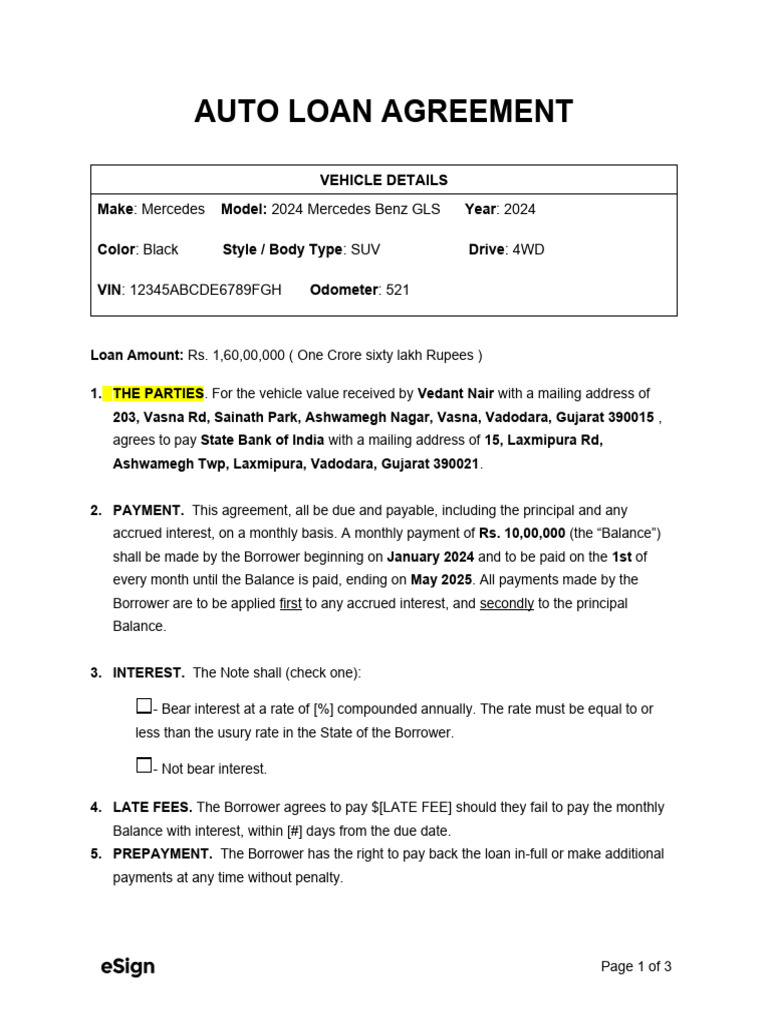
Interest Rate Factors:
| Factor | Description | Impact on Rate |
|---|---|---|
| Credit Score | A numerical representation of your creditworthiness. | Higher scores generally lead to lower interest rates. |
| Loan Term | The length of the loan. | Longer terms often have higher rates to compensate for increased risk. |
| Down Payment | The amount of money you pay upfront. | A larger down payment reduces the loan amount and can lead to a lower rate. |
| Vehicle Age & Condition | Whether the car is new or used. | New cars typically have lower interest rates than used cars. |
| Economic Conditions | The overall state of the economy. | Federal interest rates and market trends can influence car loan rates. |
Improving your credit score before applying for a loan is one of the most effective ways to secure a lower interest rate. You can do this by paying your bills on time, reducing your credit card balances, and checking your credit report for errors.
Understanding Amortization
Amortization is the process of paying off a loan over time through regular, scheduled payments. Each payment consists of both principal and interest. In the early stages of a car loan, a larger portion of your payment goes toward interest. As you continue to make payments, the interest portion decreases, and the principal portion increases. This is because the interest is calculated on the remaining loan balance, which shrinks with each payment.
Amortization Example:
Consider a $25,000 loan with a 5% interest rate over 60 months. Your monthly payment would be approximately $471.78. In the first month, about $104.17 of your payment would be interest, and $367.61 would go toward the principal. By the last month of the loan, only about $1.96 would be interest, and the remaining $469.82 would be principal.
An amortization schedule is a table that details each payment of a loan, showing the breakdown of principal and interest and the remaining balance after each payment. Our advanced car loan calculators provide a detailed amortization schedule, allowing you to see exactly how your loan is paid off over time.
Tips for Getting the Best Deal
Securing a favorable car loan requires some preparation and negotiation. Here are some tips to help you get the best deal:
Get Pre-Approved
Before you even step into a dealership, get pre-approved for a loan from a bank or credit union. This gives you a baseline interest rate and strengthens your negotiating position.
Negotiate the Car Price First
Always negotiate the price of the car separately from the financing. Finalize the vehicle's price before discussing loan terms to ensure you're getting a good deal on both.
Keep the Loan Term Short
While a longer loan term means lower monthly payments, it also means paying more in interest. Opt for the shortest loan term you can comfortably afford.
Read the Fine Print
Carefully review the loan agreement before signing. Look for any hidden fees, prepayment penalties, or other unfavorable terms.
Using a Car Loan Calculator
A car loan calculator is an invaluable tool in the car-buying process. It allows you to experiment with different loan scenarios to see how they affect your monthly payment and total interest paid. By inputting the loan amount, interest rate, and loan term, you can quickly get an estimate of your costs.
Our advanced calculators go a step further by allowing you to include factors like down payments, trade-in values, and sales tax. They also provide interactive charts and amortization schedules to give you a complete picture of your loan. Using a calculator helps you determine what you can afford, compare loan offers, and make an informed decision.
Conclusion
A car loan is a powerful financial tool that can make vehicle ownership accessible. By understanding how car loans work, the factors that influence your interest rate, and the concept of amortization, you can navigate the process with confidence. Remember to get pre-approved, negotiate the car price first, and use a car loan calculator to your advantage. With the right knowledge and preparation, you can secure a loan that fits your budget and drives you toward your financial goals.